Last weekend, I visited Bitforms gallery to see Rafael Lozano-Hemmer’s limited-time exhibition, Caressing the Circle. Running from September 4 to October 26, I wanted to ensure I saw his works before the exhibition concluded. The small gallery space featured only five pieces, but each left a deep impression. The walls were painted pure white, creating a sharp contrast between the works and their environment. I came to this gallery because I’ve always been intrigued by how Lozano-Hemmer blends technology with human interaction in his new media art. The experience didn’t disappoint.
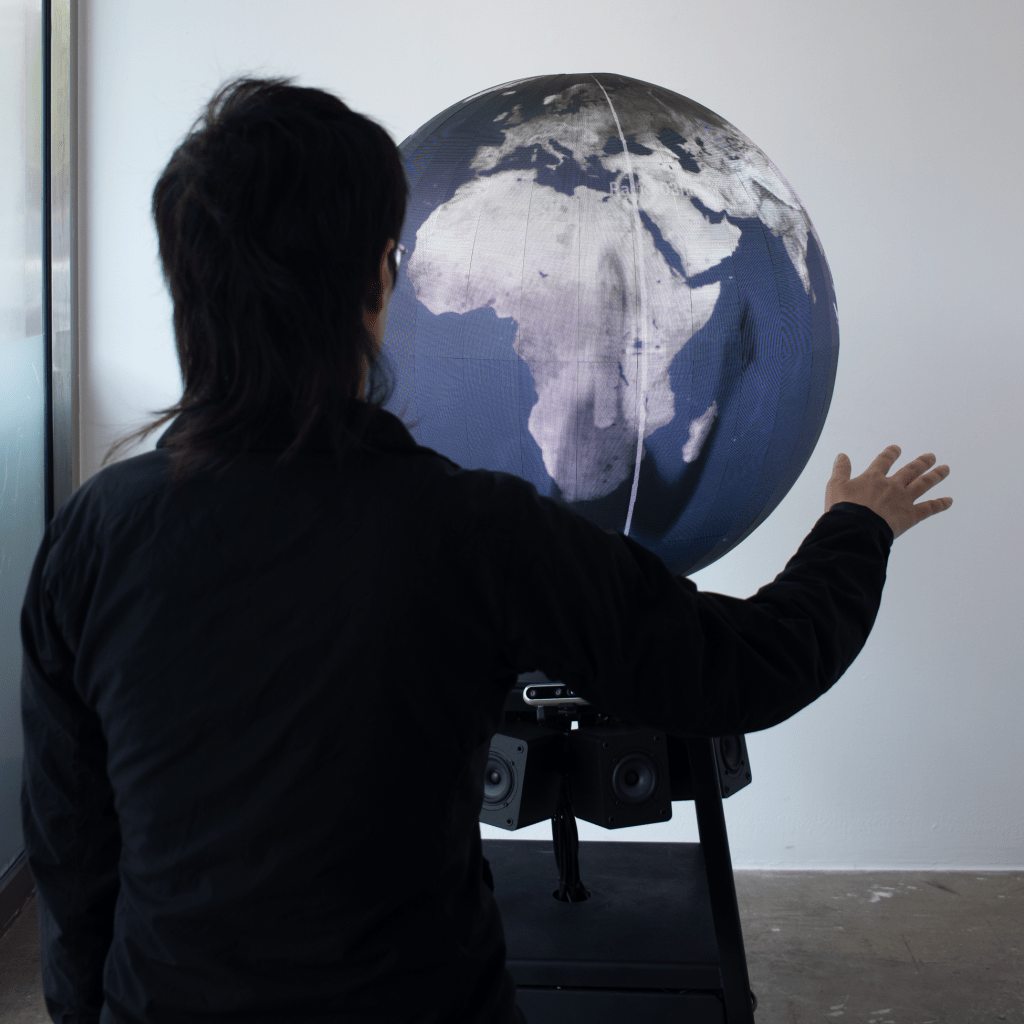
2023
The first thing that caught my eye as I entered the gallery was Shadow Tuner (2023), a large spherical LED display. This interactive piece stood 67 inches tall, resembling a giant globe, with cameras and speakers mounted around its base. As I moved in front of the globe, I could listen to live broadcasts worldwide. The built-in AI analyzer prioritized spoken word content, and when I spoke in Chinese, I was immediately tuned into a Chinese broadcast stream. With the different languages playing in the background, I continued further into the gallery.
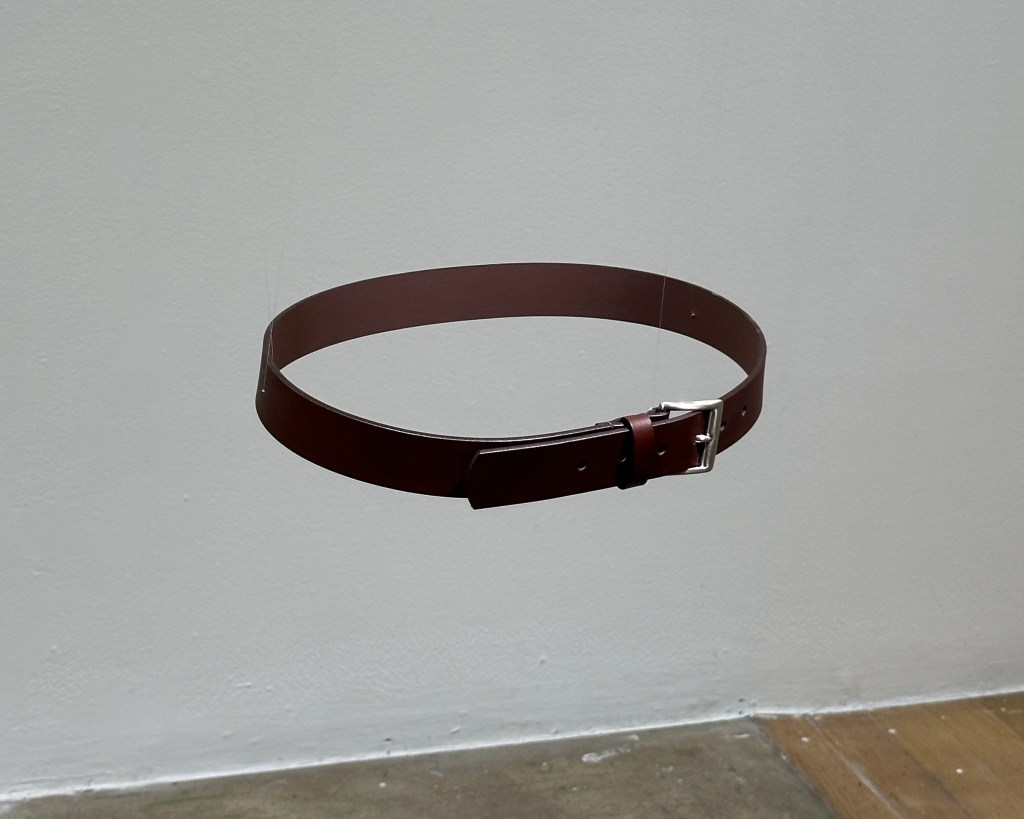
2004
The next piece that caught my attention was Standards and Double Standards: Single Belt Version (2004). This work consists of a leather belt suspended from the ceiling, and as I moved around the room, it followed me, creating a subtle confrontation between me and the piece. The belt seemed to symbolize authority or control, making me reflect on themes of surveillance and power. Although the work was completely silent, its relentless, almost indifferent movement created an atmosphere of quiet tension. The absence of a human wearer emphasized the concept of invisible authority, evoking a feeling of being watched by something intangible yet ever-present. No matter where I went, as long as I was in view of the camera, I was always being tracked, and the belt’s buckle would “stare” right at me.
The piece that left the deepest impression on me was Transparency Display (2024), an interactive glass triptych made of custom liquid crystal panels. This work simultaneously reveals and obscures the portraits of viewers on both sides of the glass in real-time, creating a surreal sense of connection, as individuals are both spectators and participants, becoming part of the installation through their fleeting reflections. At first, I thought it was a mirror, but upon closer inspection, I realized it was transparent. Later, I looked up more details and found that the technology behind Transparency Display is extraordinary. It uses liquid crystal pixels that shift between transparency and translucency, allowing portraits to appear and disappear in a subtle, haunting way. This feature is far more advanced than standard smart glass technologies, as the panels display real-time content, offering a more immersive experience than simply switching opacity for privacy.
The atmosphere of the piece was ethereal. The soft lighting in the gallery enhanced the faint silhouettes appearing and disappearing on the glass, blurring the line between indoors and outdoors. Light, shadow, and human presence created a dynamic effect that connected both sides of the triptych, turning it into a living portal. What fascinated me most were the brief personal connections the piece facilitated—seeing a stranger across the glass in such an intimate yet eerie way, as though they were right there with me. The exhibition’s layout was crucial to my understanding of the work. Despite the gallery’s small size, positioning Transparency Display in the center, with a mirrored environment on both sides, heightened the illusion of looking at oneself through another’s eyes.
 Anna Chen Blog Post
Leave a comment